
The Ferry Building's 245-foot clock tower, modelled on the Giralda bell tower in Seville, has anchored the foot of Market Street since 1898. For nearly four decades it was the second-busiest transit terminal on earth after London's Charing Cross, funnelling around 50,000 commuters a day off bay ferries into the city. Then the Bay Bridge opened in 1936, the Golden Gate Bridge in 1937, and the ferry trade collapsed almost overnight. By the 1950s the building had been carved into offices and buried behind a double-deck freeway.
The 1989 Loma Prieta earthquake did the city an accidental favour: it damaged the Embarcadero Freeway badly enough that San Francisco chose to demolish rather than repair it. The waterfront reopened to daylight, and a 2003 restoration gutted the mid-century office partitions to expose the original 660-foot nave and its steel-truss skylight. The result is one of the most successful adaptive reuses of a transit building anywhere.
Inside is a food hall that locals actually shop at. Hog Island Oyster Co. shucks Tomales Bay oysters at a marble counter; Cowgirl Creamery sells cheese made up the coast in Point Reyes; Acme Bread supplies half the good restaurants in the Bay Area; Blue Bottle, Boccalone, Humphry Slocombe and Far West Fungi fill out a roster that reads like a manifesto for Northern California food. Prices are not cheap, and the quality justifies it.
The Saturday farmers market, run by CUESA, spills across the plaza and the bayside arcade and is plausibly the best market in the country — 100-plus regional farmers, foragers and ranchers, plus prepared-food stalls where you queue behind chefs. Smaller markets run on Tuesdays and Thursdays. And the building still does its original job: Golden Gate Ferry and San Francisco Bay Ferry sail from the slips behind it to Sausalito, Larkspur, Tiburon, Oakland and Vallejo. The 30-minute Sausalito crossing, with the skyline receding behind you and Alcatraz off the starboard rail, is the cheapest great bay cruise in San Francisco.
The inside local's take
Completed in 1898, the Ferry Building was the busiest transit terminal in the world outside London until the Bay Bridge opened in 1936.
Its Saturday farmers market (8am–2pm) is arguably the best on the West Coast — Hog Island oysters, Cowgirl Creamery cheese, and pastries from Frog Hollow.
Time your visit for a Golden Gate Ferry ride across the bay to Sausalito — 30 minutes each way with an unmatched skyline view.
Plan the visit
Everything you need before you go
Best time to visit
- Saturday from 8am to 2pm for the full CUESA farmers market — arrive before 10am to beat the crush and still find the good stone fruit.
- Weekday mid-mornings are calm inside the marketplace if you want to browse and eat without queueing.
- Sunset from the bayside promenade behind the building frames the Bay Bridge lights beautifully.
- Tuesday and Thursday markets are smaller, more local and far less crowded than Saturday.
How to get there
- Embarcadero Station, served by BART and every Muni Metro line, is one block west — this is the easiest landmark in the city to reach by transit.
- The F-Line historic streetcar runs restored trams along the Embarcadero and stops directly outside.
- It's a flat 25-minute waterfront walk north to Pier 39 and Fisherman's Wharf.
- Driving is the worst option; parking is limited paid garage space and the surrounding streets are congested.
Tickets & access
- Free to enter. The marketplace is typically open 10am to 7pm on weekdays with shorter Sunday hours; individual vendors vary.
- The farmers market is free to browse; bring a tote and a card, though most stalls take cash too.
- Ferry tickets are bought at the terminal kiosks or through the operators' apps; Clipper cards work on all bay ferry services.
- The building is fully step-free with lifts and accessible restrooms, and the ferry gangways are ramped.
Nearby & pairs well with
Make a day of it around Ferry Building


More landmarks
See all →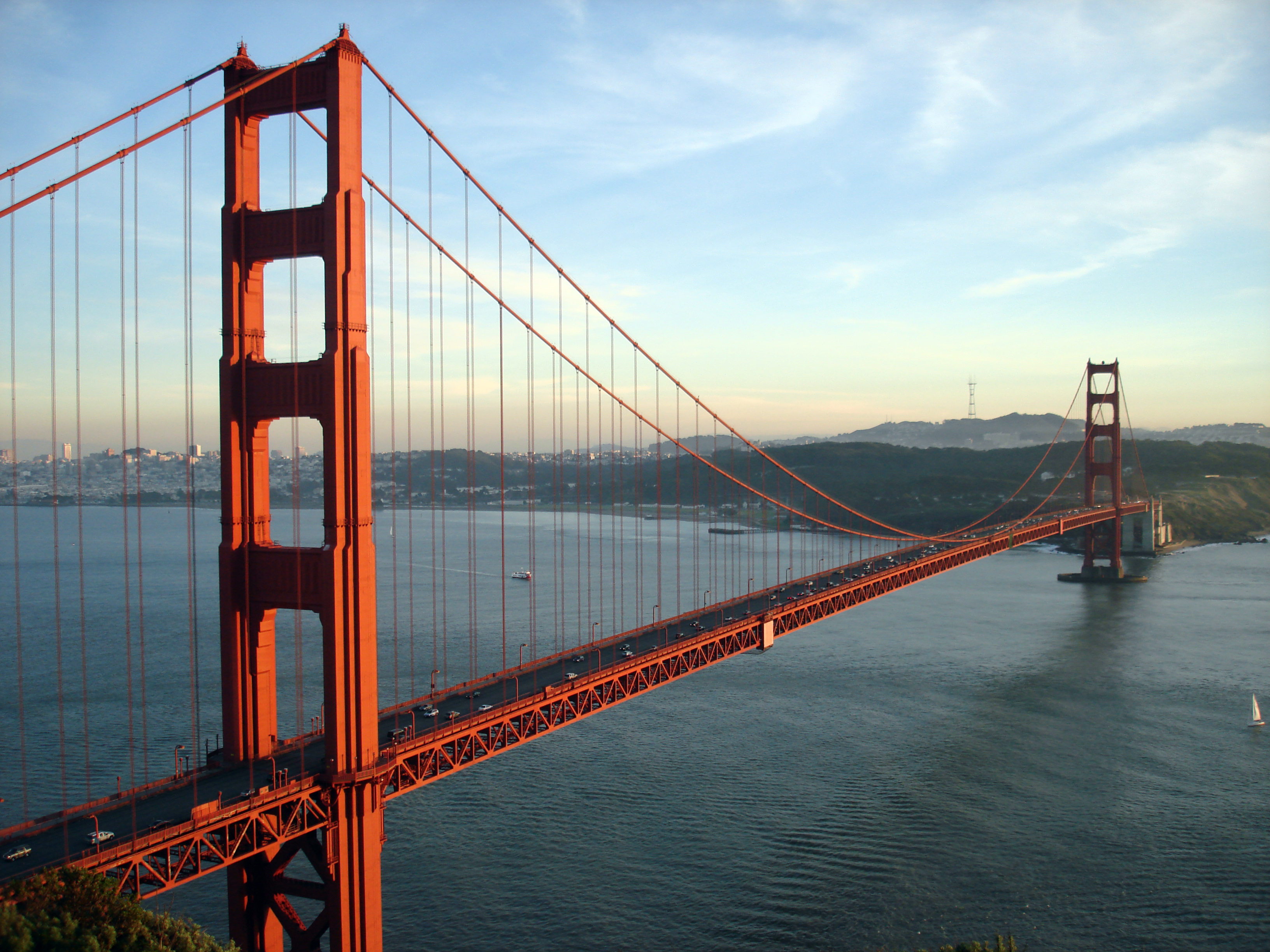
Golden Gate Bridge
The 1.7-mile International Orange span opened in 1937 and still steals every San Francisco skyline. Walk it from Battery East for the classic view.

Alcatraz Island
The federal penitentiary that held Capone and Machine Gun Kelly. Ferries leave Pier 33; the cellhouse audio tour is one of America's finest.

Painted Ladies of Alamo Square
The famous row of pastel Victorians on Steiner Street, with the downtown skyline framed perfectly behind them from the park's east lawn.