
The Palace of Fine Arts is a deliberate ruin. When Bernard Maybeck designed it for the 1915 Panama-Pacific International Exposition — the world's fair San Francisco threw to announce it had rebuilt itself after the 1906 earthquake — he wanted something melancholy rather than triumphant: a Greco-Roman rotunda decaying gracefully beside a lagoon, half-swallowed by planting, evoking, in his words, 'an old Roman ruin, away from civilization.' It's the only structure of the fair's grand palaces still standing, and the strangest and most beautiful thing in the Marina District.
The rotunda rises 162 feet, ringed by a colonnade whose capitals are topped by weeping female figures who face inward, backs to the visitor — a detail that unsettles people once they notice it. Maybeck intended them to express 'the melancholy of life without art.' The whole thing was originally built to last only the fair's ten-month run, framed in wood and clad in staff, a mix of plaster and burlap fibre. It was never demolished, simply because San Franciscans refused to let it go.
By the 1950s it was genuinely crumbling. A reconstruction beginning in 1964 recast the entire structure in poured concrete from moulds of the originals, and a further seismic retrofit and lagoon restoration finished in 2009. What you see today is faithful to Maybeck's design down to the urns and the frieze, just built to survive earthquakes.
The lagoon is the other half of the experience. Swans, ducks, turtles and the occasional heron work the water, and on a windless morning the reflection of the rotunda is close to perfect — which is why this is the most booked wedding-photography site in the city. The surrounding lawns are a genuine neighbourhood park rather than a tourist enclosure, and the Marina Green waterfront path starts a block away, running flat along the shoreline through Crissy Field to the foot of the Golden Gate Bridge. That three-mile walk is the best introduction to San Francisco's waterfront there is.
The inside local's take
Designed by Bernard Maybeck to evoke a Roman ruin. Originally built of plaster and burlap, it was rebuilt in permanent concrete in the 1960s and restored again in 2009.
The reflecting lagoon is home to swans, ducks, and a very photogenic sunrise. Come before 8am for glassy water and no crowds.
Pair a visit with a walk along the Marina Green to Crissy Field — a flat, three-mile shoreline that ends directly beneath the Golden Gate Bridge.
Plan the visit
Everything you need before you go
Best time to visit
- Before 8am for glassy, windless water and a mirror reflection — this is the shot photographers get up for, and you'll share the site with a handful of joggers.
- Sunset lights the ochre colonnade warmly and the lagoon picks up the sky; expect wedding parties on weekend evenings.
- September and October offer the clearest, warmest conditions in this notoriously windy part of the city.
- The site is floodlit after dark and is quietly spectacular, and safe, on a clear evening.
How to get there
- Muni routes 28, 30 and 43 all stop within a few blocks of the Lyon Street and Bay Street entrances.
- Free street parking is genuinely available on Baker and Bay Streets — a rarity in San Francisco — and there's a small lot off Palace Drive.
- It's a flat 25-minute walk east from the Golden Gate Bridge via Crissy Field, or 35 minutes west from Fisherman's Wharf along Marina Green.
- Bike share docks sit at the Marina Green, and the whole waterfront route is flat and separated from traffic.
Tickets & access
- Free, unfenced and open to the public around the clock. No tickets, no gates.
- Paths around the lagoon and through the colonnade are paved and level, making this one of the most wheelchair-friendly landmarks in the city.
- The adjacent Palace of Fine Arts Theatre hosts ticketed events; the rotunda and grounds remain free regardless.
- Restrooms are on site; the nearest cafes and groceries are two blocks south on Chestnut Street.
Nearby & pairs well with
Make a day of it around Palace of Fine Arts


More landmarks
See all →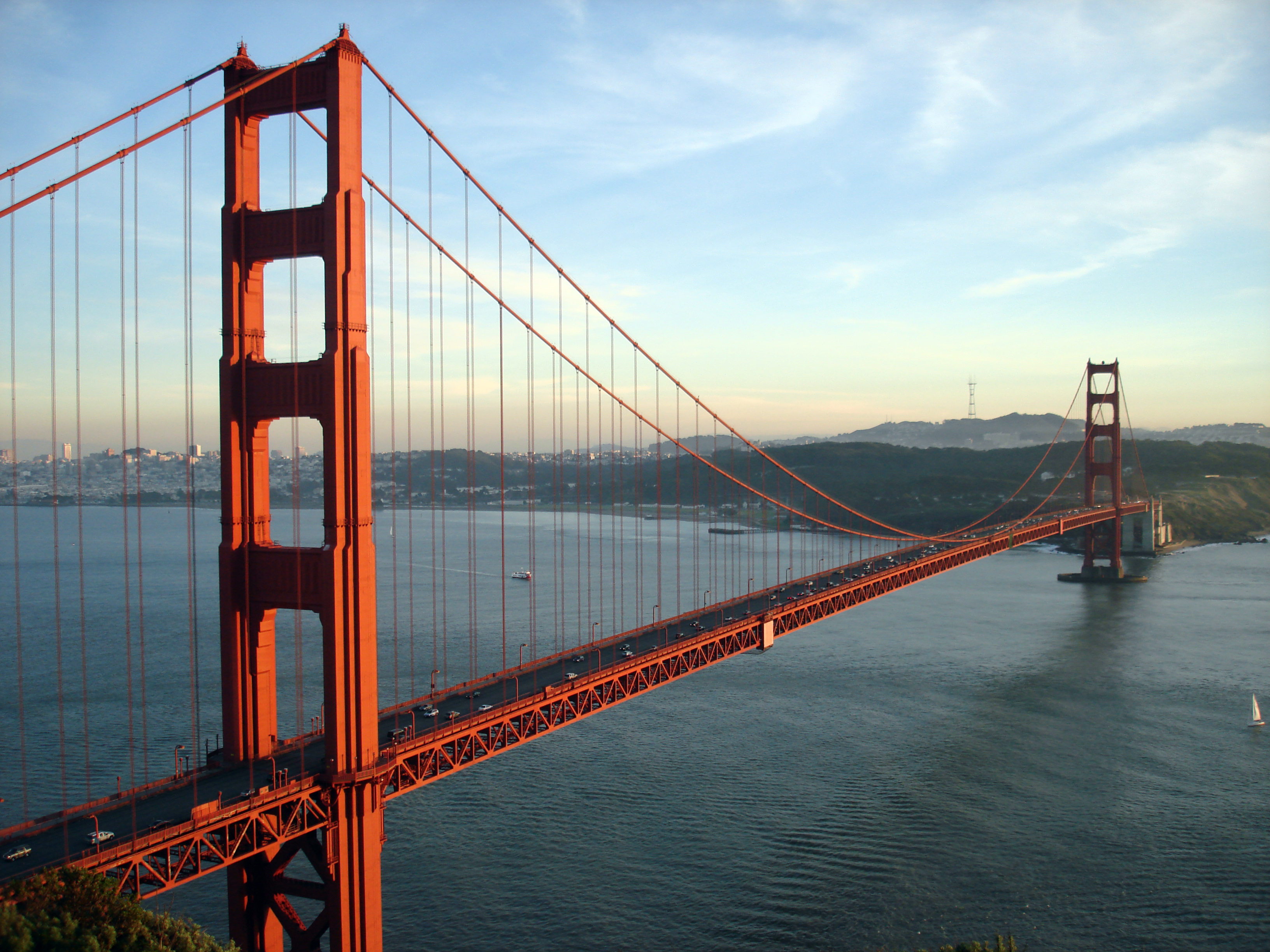
Golden Gate Bridge
The 1.7-mile International Orange span opened in 1937 and still steals every San Francisco skyline. Walk it from Battery East for the classic view.

Alcatraz Island
The federal penitentiary that held Capone and Machine Gun Kelly. Ferries leave Pier 33; the cellhouse audio tour is one of America's finest.

Painted Ladies of Alamo Square
The famous row of pastel Victorians on Steiner Street, with the downtown skyline framed perfectly behind them from the park's east lawn.