
Coit Tower is a 210-foot fluted Art Deco column planted on the summit of Telegraph Hill, and it exists because of one eccentric benefactor. Lillie Hitchcock Coit, a cigar-smoking, poker-playing socialite who had chased fire engines through the city as a teenager and was made an honorary member of Knickerbocker Engine Company No. 5, left a third of her estate in 1929 'for the purpose of adding to the beauty of the city I have always loved.' The tower opened in 1933. The persistent story that it was designed to resemble a fire hose nozzle is charming and almost certainly untrue — architects Arthur Brown Jr. and Henry Howard denied it — but nobody in San Francisco is in a hurry to correct the record.
The murals in the ground-floor lobby are the reason art historians visit. Twenty-six artists working under the Public Works of Art Project — the New Deal's first federal art programme — covered 3,691 square feet of wall in fresco depicting Californian labour: dockworkers, farm hands, steelworkers, a newsstand, a library, a stockbroker's office. The politics were pointed enough that the tower's opening was delayed amid controversy over Communist imagery, including a hammer and sickle and a visible copy of the Daily Worker. They remain among the finest surviving examples of Depression-era social realism in the country, and admission to view them is free.
The observation deck is the payoff. From 210 feet up on a hill that's already 295 feet high, the panorama runs unbroken: the Golden Gate and Marin Headlands to the northwest, Alcatraz and Angel Island straight ahead, the Bay Bridge and East Bay to the east, and the whole grid of North Beach, Chinatown and the Financial District below. Few city viewpoints anywhere give you a true 360 at this height without glass in the way.
Then there are the parrots. A feral flock of cherry-headed conures — descendants of escaped pets, made famous by the documentary The Wild Parrots of Telegraph Hill — genuinely lives in the trees around Pioneer Park and the Filbert Steps. You'll hear them before you see them. The Filbert and Greenwich Steps themselves, wooden staircases threading down through private cottage gardens to the Embarcadero, are one of the great urban walks in America and the best way to leave the tower.
The inside local's take
Built in 1933 with funds bequeathed by Lillie Hitchcock Coit to beautify her beloved city. The lobby murals are a national treasure of Depression-era social realism.
The elevator to the observation deck is small — expect a wait on summer weekends. The 360° view sweeps from the Golden Gate to the Bay Bridge.
Skip the parking chaos: climb the Filbert Steps up through cottage gardens and wild parrots for one of the great urban walks in America.
Plan the visit
Everything you need before you go
Best time to visit
- Right at opening, around 10am, for the smallest elevator queue and the clearest morning air over the bay.
- Late afternoon gives warmer light on the Golden Gate for photographs from the deck, but summer weekend queues can run 45 minutes.
- Winter weekdays after a storm are the sharpest visibility of the year and often nearly empty.
- Avoid arriving between noon and 3pm on a summer weekend — that's peak tour-bus congestion on the access road.
How to get there
- Muni bus 39 (Coit) runs to the tower door from Washington Square in North Beach and is by far the easiest option.
- On foot from the Embarcadero, climb the Filbert Steps — steep, roughly 20 to 30 minutes, and one of the best walks in the city.
- From Chinatown or North Beach, it's a 15-minute uphill walk via Lombard or Filbert Street.
- Driving is discouraged. The summit lot holds very few cars, the queue for it backs down the hill, and the surrounding streets are permit-only.
Tickets & access
- The lobby and its WPA murals are free to enter.
- The elevator to the observation deck charges a modest admission, with lower rates for children, seniors and San Francisco residents; tickets are sold on site.
- Typical hours are 10am to 5pm daily, extended in summer. Last elevator runs roughly 30 minutes before closing.
- The lobby and elevator are wheelchair accessible; the Filbert Steps route is not.
- Docent-led tours of the second-floor murals, which are otherwise closed to the public, run on select days — check on arrival.
Nearby & pairs well with
Make a day of it around Coit Tower on Telegraph Hill


More landmarks
See all →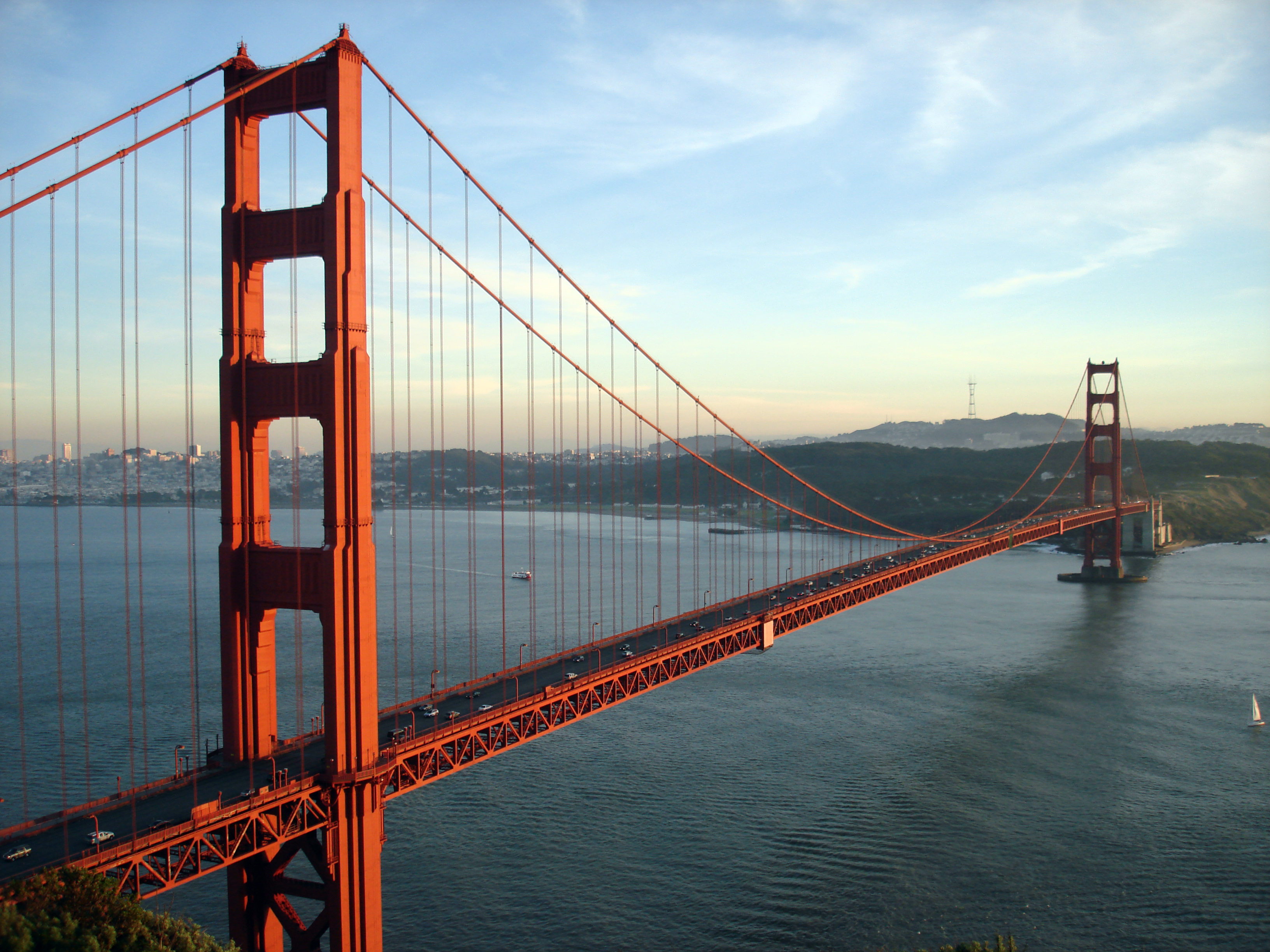
Golden Gate Bridge
The 1.7-mile International Orange span opened in 1937 and still steals every San Francisco skyline. Walk it from Battery East for the classic view.

Alcatraz Island
The federal penitentiary that held Capone and Machine Gun Kelly. Ferries leave Pier 33; the cellhouse audio tour is one of America's finest.

Painted Ladies of Alamo Square
The famous row of pastel Victorians on Steiner Street, with the downtown skyline framed perfectly behind them from the park's east lawn.